5 Common LIS Mistakes Labs Make and How to Avoid Them
When the System That Should Save Time Creates Chaos
A Laboratory Information System (LIS) is designed to make labs faster, more accurate, and more compliant. But when implemented or managed poorly, it can have the opposite effect creating inefficiencies, bottlenecks, and compliance risks that quietly drain productivity and profit.
Across hundreds of labs, the same mistakes appear repeatedly not because teams aren’t capable, but because LIS systems are often underutilized, misconfigured, or disconnected from the lab’s true workflow.
This blog highlights the five most common LIS mistakes and shows how to avoid them so your system works for your lab, not against it.
1. Treating LIS as a Data Storage Tool Instead of a Workflow Engine
The Mistake
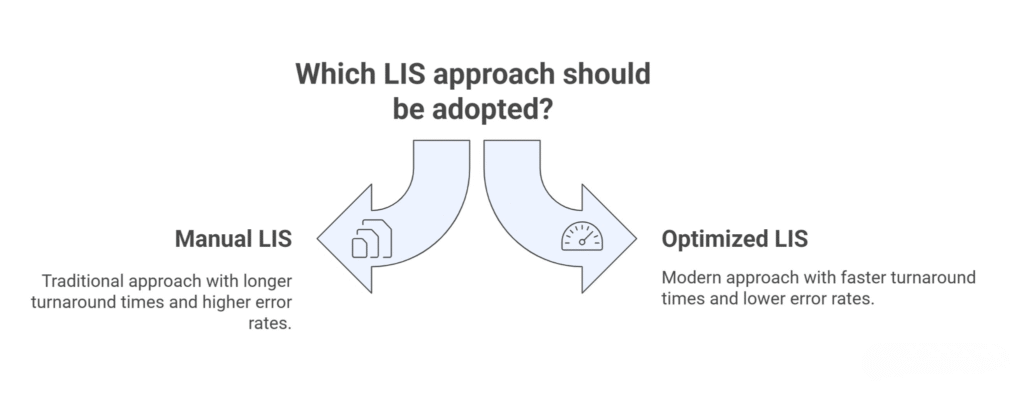
Many labs treat their LIS like a filing cabinet a place to store results and reports. But a modern LIS is more than a database. It’s a workflow automation system that drives efficiency, compliance, and accuracy across the entire testing lifecycle.
When labs fail to use features like automatic routing, result validation, or QC checks, they lose the time-saving potential the system offers.
The Fix
Configure your LIS to act as the central hub for every process:
-
- Automate accessioning and result routing
- Enable autoverification and delta checks
- Integrate QC modules for real-time validation
- Connect analyzers, billing, and EMR systems
A well-configured LIS doesn’t just hold data it moves it seamlessly, reducing manual touchpoints and turnaround time.
2. Ignoring Integration with Other Systems
The Mistake
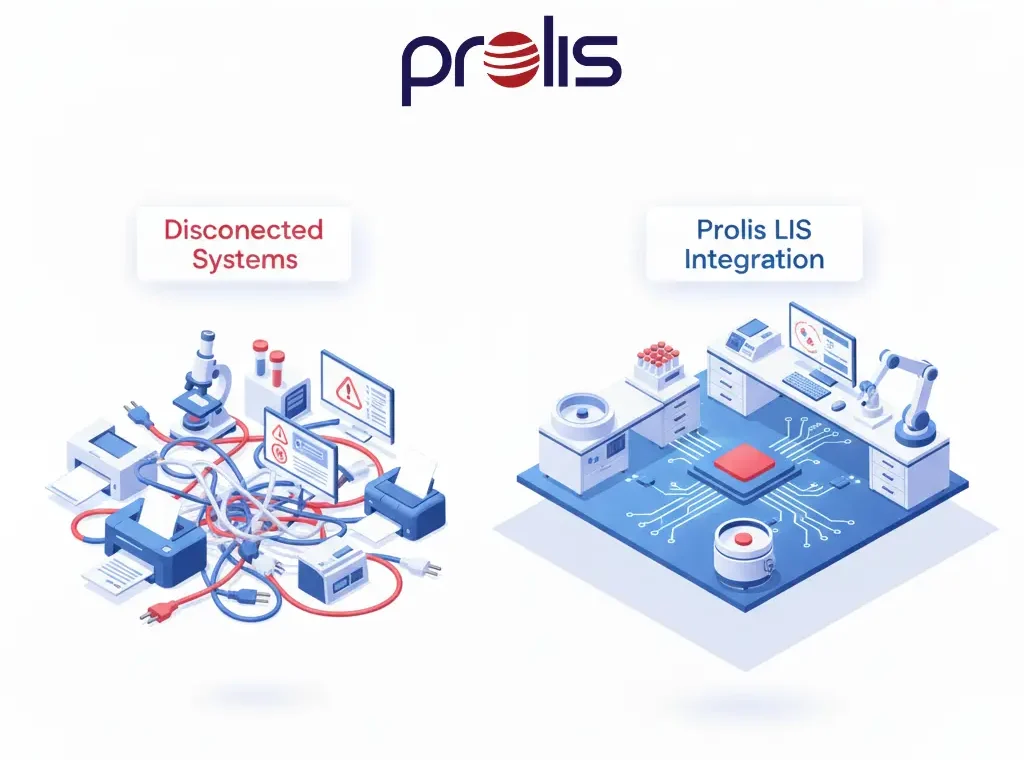
Labs often treat LIS, EMR, and billing software as separate ecosystems. Without proper integration, staff must manually re-enter data or reconcile results across systems a process that introduces errors and slows operations.
Disconnection between systems causes:
-
- Duplicate data entry
- Delayed billing
- Missing result notifications
- Inconsistent patient identifiers
The Fix
Build a connected lab ecosystem. Choose a LIS that supports:
-
- HL7 or FHIR-based interfaces
- Real-time bidirectional data exchange
- Automated claim triggers
- Secure result delivery to provider systems
An integrated LIS like Prolis bridges clinical, financial, and compliance workflows creating a single source of truth for every test.
3. Neglecting User Training and Configuration
The Mistake
Labs often underestimate how much training is needed for staff to fully leverage their LIS. Without proper onboarding, users rely on manual workarounds, outdated processes, or inconsistent data entry habits that defeat automation.
The Fix
Treat training as a core part of implementation not an afterthought.
-
- Schedule periodic refresher sessions
- Customize roles and permissions for accuracy
- Create quick-reference guides for key workflows
- Encourage staff feedback to identify gaps
Your LIS is only as strong as the people using it. When every user knows why and how the system works, productivity follows naturally.
4. Failing to Maintain Data Quality and Standardization
The Mistake
As labs grow, so does their data and without standardization, it becomes chaotic. Inconsistent naming conventions, test codes, or demographic fields lead to confusion, reporting errors, and compliance risk.
Examples include:
-
- Duplicate patient records
- Mismatched test names
- Inconsistent CPT or LOINC mapping
- Missing insurance or provider information
The Fix
Establish a data governance strategy:
-
- Use master lists for test names and panels
- Map codes to industry standards (LOINC, CPT, ICD-10)
- Run periodic data cleanup and validation routines
- Automate field validation inside the LIS
Clean, structured data ensures smoother operations and stronger regulatory compliance.
5. Overlooking Compliance and Audit-Readiness Tools
The Mistake
Labs often focus on speed and output, forgetting that compliance is part of profitability. Failing to leverage LIS tools for audit trails, QC tracking, and document retention can lead to penalties, failed inspections, and rework.
The Fix
Make compliance part of the daily workflow:
-
- Activate audit trail tracking for every case
- Store QC logs and maintenance schedules in the LIS
- Generate automated CLIA/CAP-ready reports
- Link all test events to traceable user actions
In a well-configured LIS, compliance isn’t an extra step it’s built into every process.
Why These Mistakes Cost Labs More Than They Realize
Each of these mistakes isolation, poor training, bad data, or ignored compliance leads to tangible losses:
- Increased turnaround time
- Higher claim denials
- Manual rework and staff frustration
- Missed regulatory deadlines
- Reduced trust from providers and payers
Fixing them early means fewer downstream costs and more time for what truly matters: accuracy, quality, and patient care.
How Prolis Helps Labs Avoid These Mistakes
Prolis is designed to prevent these pitfalls through:
- End-to-end automation across accessioning, testing, and billing
- Seamless integration with analyzers, EMRs, and RCM systems
- Custom user roles and easy configuration
- Built-in compliance modules for audit trails and QC
- Data validation at every stage
Labs using Prolis see smoother workflows, cleaner claims, and faster scalability without the friction of disjointed systems.
Conclusion: Turn Mistakes into Momentum
Every lab faces challenges when adopting or managing LIS systems. The difference between success and struggle lies in how quickly those mistakes are identified and corrected.
An LIS should never be a bottleneck it should be a backbone. When implemented strategically, it amplifies efficiency, strengthens compliance, and builds a lab’s capacity to grow sustainably.
With Prolis, labs don’t just avoid mistakes they transform them into long-term operational advantage.