Digital Pathology Integration: How to Future-Proof Your Laboratory
Introduction: The Shift Toward Digital Pathology
Pathology is the foundation of diagnostic medicine. Every tissue sample, every biopsy, and every microscopic slide provides the insight that guides treatment decisions. For decades, the field was defined by glass slides, light microscopes, and handwritten notes. In recent years, that picture has changed. Digital pathology is no longer an experimental add-on. It has become a mainstream tool that is transforming how labs operate.
Digital pathology involves converting glass slides into high-resolution digital images that can be stored, analyzed, and shared electronically. This change brings new efficiencies and possibilities, but it also introduces new complexities. The key challenge for laboratories is not just acquiring digital pathology technology. It is integrating it seamlessly into the laboratory information system (LIS). Without that integration, digital pathology becomes just another silo that slows progress instead of accelerating it.
In 2025, the labs that thrive will be those that understand this shift and embrace integration as the path forward.
Why Digital Pathology Integration Matters
Higher Volume, Higher Complexity
Traditional pathology was constrained by physical limitations. A pathologist could only view one slide at a time under a microscope, and sharing that slide required shipping it across town or across the country. Digital pathology removes those barriers, allowing labs to handle far higher volumes of images and data. But with higher volume comes higher complexity.
A single whole-slide image can be several gigabytes in size. Multiply that across hundreds of cases, and labs face enormous storage, retrieval, and organization challenges. Without integration into the LIS, this data quickly becomes fragmented, hard to track, and prone to loss.
AI and Advanced Analytics
Artificial intelligence is becoming a trusted partner in pathology. AI algorithms can highlight regions of interest, quantify features, and even suggest preliminary interpretations. These tools generate valuable data, but that data must be tied back to the LIS. Otherwise, labs risk breaking the chain of custody and losing the auditability that regulators require.
An integrated LIS ensures that every AI output is linked to the correct case, stored securely, and available for inclusion in official reports.
Collaboration Across Sites
Artificial intelligence is becoming a trusted partner in pathology. AI algorithms can highlight regions of interest, quantify features, and even suggest preliminary interpretations. These tools generate valuable data, but that data must be tied back to the LIS. Otherwise, labs risk breaking the chain of custody and losing the auditability that regulators require.
An integrated LIS ensures that every AI output is linked to the correct case, stored securely, and available for inclusion in official reports.
Compliance and Security
Pathologists are increasingly working remotely or across distributed networks of hospitals and labs. Digital pathology makes this possible by enabling instant slide sharing. Yet, if image data lives outside the LIS, collaboration becomes fragmented and compliance risks increase.
With LIS integration, pathologists can log into a secure system, access cases with embedded digital slides, and collaborate in real time. The LIS ensures the right users see the right cases at the right time.
The Risks of Non-Integrated Digital Pathology
- Data silos between imaging systems and LIS
- Manual data entry errors when linking imaging results to cases
- Delayed turnaround times due to disconnected workflows
- Security vulnerabilities if images are stored outside of HIPAA-compliant infrastructure
- Regulatory risks with incomplete chain-of-custody or audit logs
Benefits of Integrating Digital Pathology with LIS
Centralized Data Management
Integration brings imaging data and case data together in one place. Pathologists no longer switch between multiple platforms. Every digital slide is directly linked to its case record in the LIS, eliminating duplication and ensuring accuracy.
Workflow Efficiency
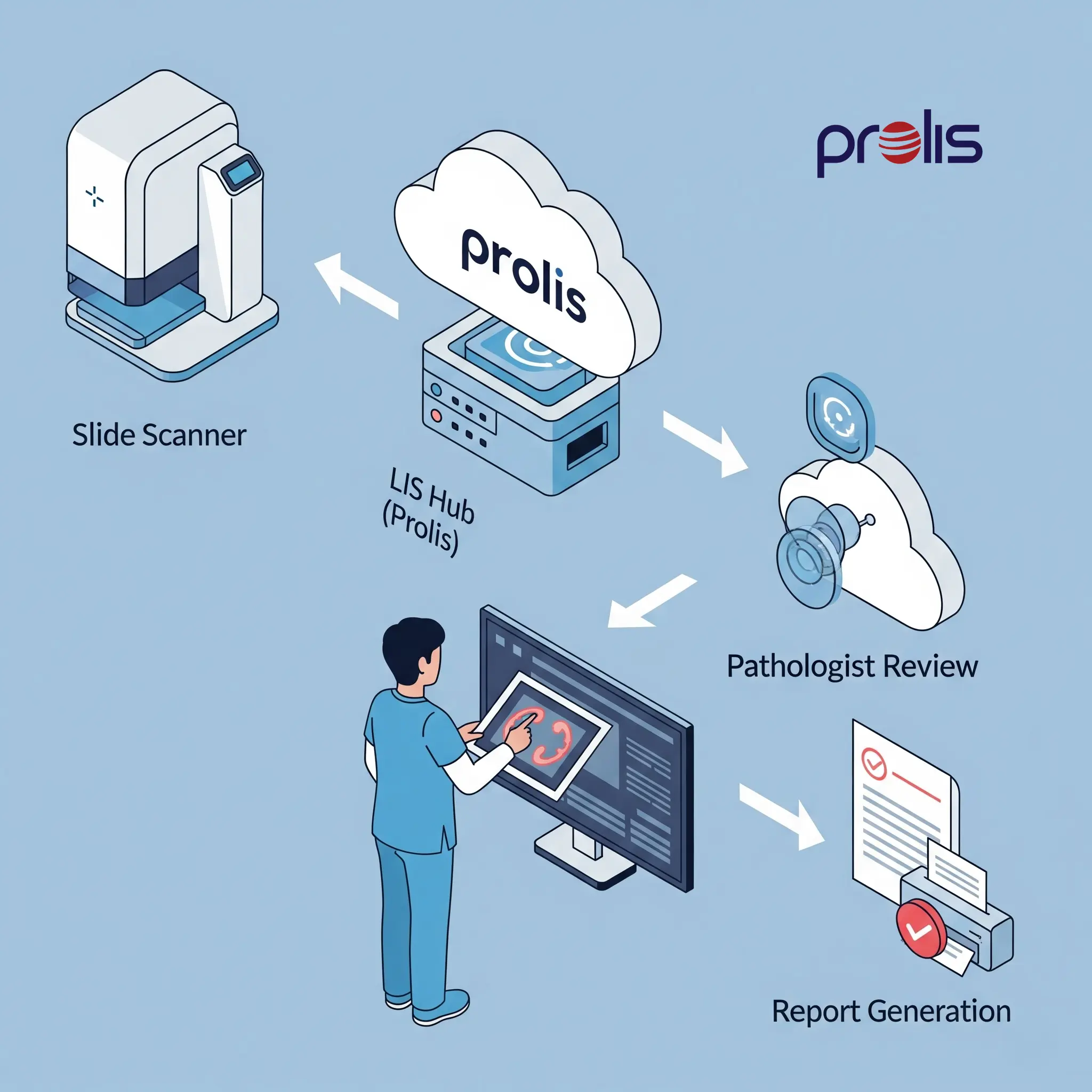
A digitized slide should flow seamlessly through the lab workflow. With integration, slides are scanned, indexed, and attached to cases automatically. Pathologists can review, annotate, and finalize reports without re-entering data. This reduces turnaround times and increases efficiency.
Enhanced Collaboration
With integration, multi-site and remote teams can securely access the same case files. Second opinions and consults become faster, and collaboration feels natural instead of forced.
Compliance and Auditability
Every action on a digital slide from viewing to annotation to reporting is logged in the LIS. This ensures labs can meet HIPAA, CAP, and CLIA requirements with confidence.
Scalability for Growth
Digital pathology adoption is accelerating. Labs that integrate early can scale their capacity without major disruptions. Whether processing hundreds of slides a week or thousands, an integrated LIS grows with the lab.
Core Features of LIS-Enabled Digital Pathology
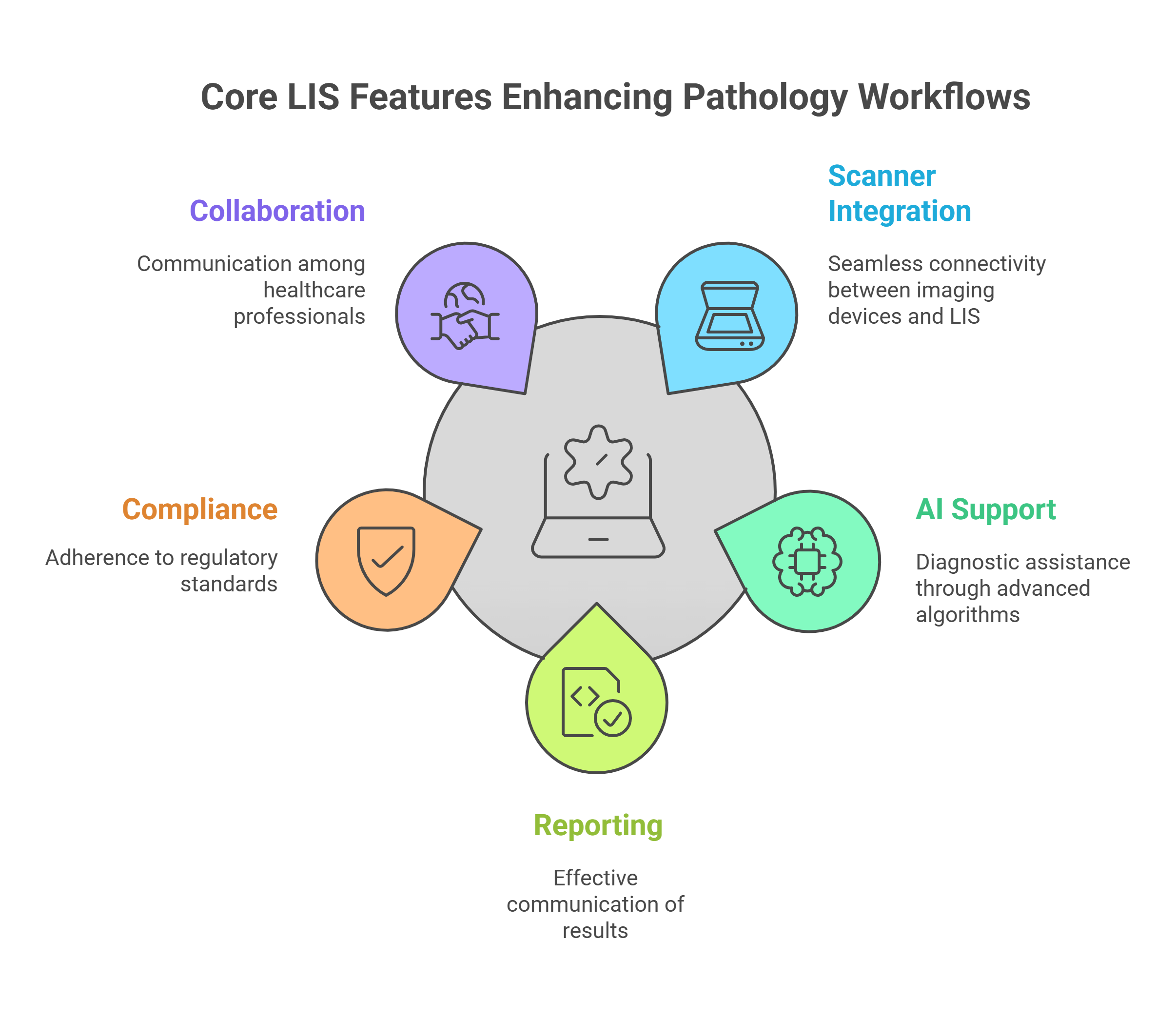
- WSI Integration
- Direct links between slide scanners and LIS records
- Automated image indexing tied to case accession
- AI Result Incorporation
- Integration with pathology AI software
- Automated result attachment to patient records
- Customizable Reporting
- Support for image annotations in reports
- Configurable templates for different providers
- Secure Access and Sharing
- Role-based access for pathologists, clinicians, and researchers
- Audit logs for every view and action
- Data Lifecycle Management
- Archiving strategies for large slide datasets
- Easy retrieval for research, re-review, or compliance audits
Why Prolis is Built for Digital Pathology
Prolis provides the infrastructure for future-ready pathology labs by:
- Enabling secure remote access for pathologists and collaborators
- Offering configurable pathology reporting templates
- Ensuring compliance with HIPAA, CLIA, and CAP standards
By embedding digital pathology into the LIS ecosystem, Prolis eliminates silos, accelerates turnaround times, and positions your lab for future scalability.
Future-Proofing: What to Expect in the Next 5 Years
- AI-as-a-Standard: AI pathology models will move from experimental to routine.
- Hybrid Cloud Storage: Labs will balance on-premise storage with scalable cloud options for massive slide archives.
- Global Collaboration: Pathology networks will expand internationally, requiring secure LIS-based connectivity.
- Regulatory Evolution: Expect updated CAP and FDA guidelines on AI-assisted diagnostics.
A lab that integrates digital pathology today will be prepared for these advances tomorrow.
Conclusion: Integration Is the Key to the Future
Digital pathology is not just a technology it is a transformation in how labs operate. But transformation requires integration.
A standalone imaging system cannot deliver the compliance, efficiency, and scalability that modern labs demand. By connecting digital pathology directly into a specialized LIS like Prolis, your lab is not only keeping up with 2025, but also laying the foundation for the next decade of innovation.