
Reducing Operational Costs with a Value-Based LIS Model
Moving Beyond Transactional Software
For many labs, software decisions have traditionally been made based on upfront costs not long-term value. A “basic” Laboratory Information System (LIS) might seem affordable at first glance, but over time, hidden inefficiencies, manual labor, and lack of integration quietly increase operational expenses.
In contrast, a value-based LIS model focuses on total return how the system reduces costs, improves efficiency, and creates measurable financial and clinical outcomes.
In 2025, laboratories facing tighter reimbursements and staffing shortages are realizing that the true cost of a LIS isn’t what you pay for it — it’s what it saves you.
What Is a Value-Based LIS Model?
A value-based LIS model goes beyond simple data management. It’s designed to:
- Optimize every touchpoint in the workflow
- Automate repetitive manual tasks
- Integrate with instruments, EMRs, and billing systems
- Deliver insights that reduce waste and labor inefficiency
Rather than a fixed transactional tool, it functions as an adaptive system that grows with the lab continuously improving ROI as operations expand.
The Problem with Traditional LIS Pricing
Many labs choose low-cost or legacy LIS platforms based solely on licensing or subscription fees. But these systems often:
- Lack automation features
- Require extra manual data entry
- Fail to integrate with other software
- Add hidden costs through inefficiency
The result? Operational drag. Labs spend more time managing systems than serving patients or processing tests.
A value-based LIS model flips this dynamic focusing on outcome-based performance rather than feature lists.
5 Ways a Value-Based LIS Model Reduces Operational Costs
1. Automation Replaces Manual Labor
Manual data entry and tracking are the most time-consuming (and error-prone) parts of lab operations. A value-based LIS automates:
- Test accessioning
- Result validation
- QC monitoring
- Report generation
- Billing triggers
Impact: Labs can reallocate staff time from repetitive tasks to higher-value roles like client management and quality improvement reducing FTE costs by 20–30%.
2. Integration Eliminates Redundant Systems
Many labs pay for multiple disconnected systems LIS, billing software, QC trackers, EMRs, and spreadsheets.
A value-based LIS consolidates all of this, providing:
- End-to-end automation from test order to payment
- Single sign-on for staff
- Unified data reporting
Impact: Eliminates software overlap and reduces IT maintenance costs saving labs thousands annually.
3. Reduced Errors and Rework
Every manual error carries a cost in wasted reagents, repeated tests, billing rejections, or compliance penalties.
A value-based LIS reduces human error through:
- Automated field validation
- Barcode specimen tracking
- Rule-based result verification
- Built-in compliance checks
Impact: Labs using automated validation see up to a 40% reduction in repeat testing and denials, directly improving profit margins.
4. Data-Driven Resource Optimization
Traditional LIS systems store data; value-based systems use it.
Prolis, for instance, provides:
- Utilization dashboards for reagents and consumables
- Turnaround time analysis by test or staff member
- Volume forecasting for resource planning
Impact: Data transparency helps labs make smarter purchasing and staffing decisions, reducing waste and improving efficiency.
5. Faster Billing and Collections
Disconnected billing workflows lead to delayed revenue. A value-based LIS includes built-in billing integration that:
- Automates clean claim submission
- Flags missing information before submission
- Tracks payment status in real time
Impact: Shorter AR cycles, fewer denials, and improved cash flow without hiring extra billing staff.
Measuring the ROI of a Value-Based LIS
A value-based LIS doesn’t just cut costs it creates value across financial and operational metrics.
| Metric | Before | After LIS Integration |
|---|---|---|
| Manual hours per day | 6–8 | 2–3 |
| Claim denial rate | 12–15% | <5% |
| Reagent waste | High | Moderate–Low |
| Turnaround time | 48 hours | 24 hours |
| QC compliance rate | 75% | 95–100% |
In a year, these savings translate to significant gains in both productivity and profit.
Why Prolis Embodies the Value-Based Model
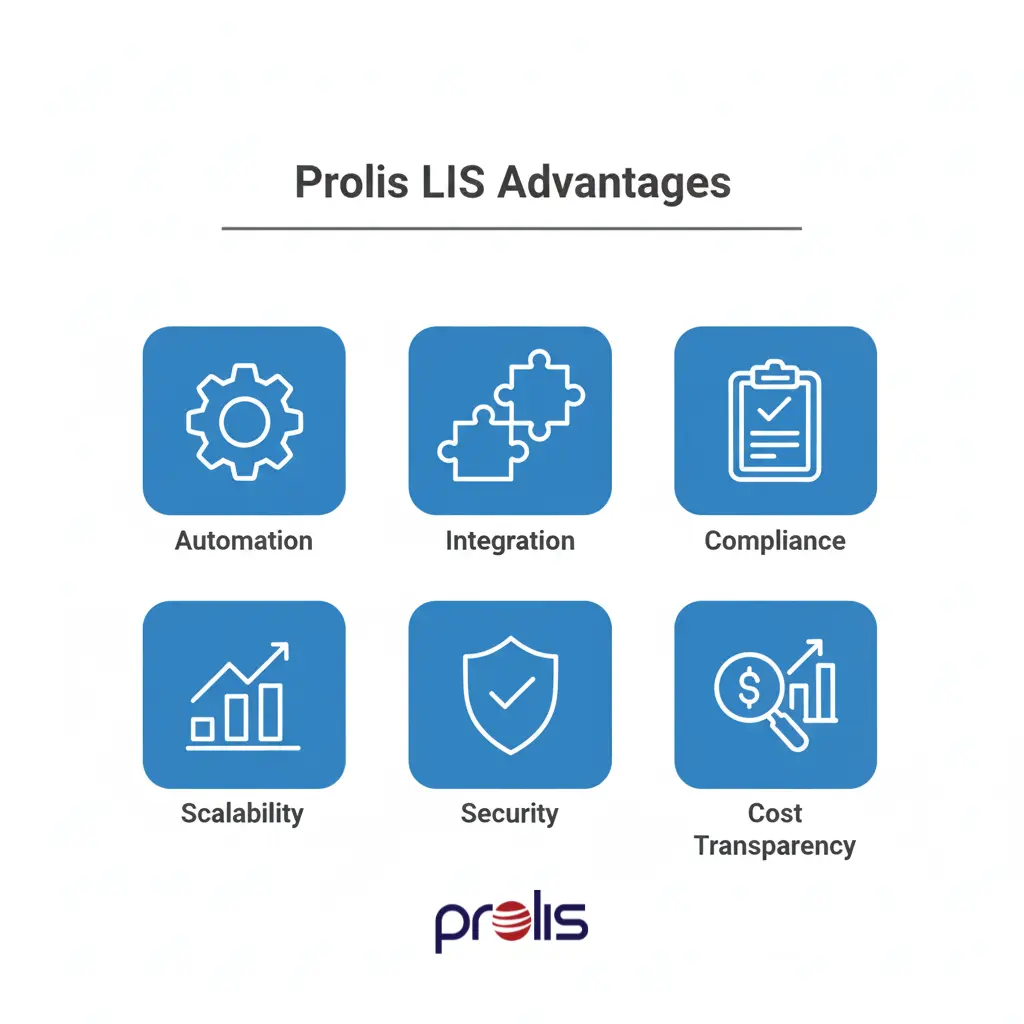
Prolis is designed to deliver measurable operational and financial value, not just function.
Built-In Efficiency
Automated workflows replace manual processes across the testing lifecycle.
End-to-End Integration
Prolis connects analyzers, EMRs, RCM, and QC all in one system.
Adaptive Scalability
Labs can add new test types, modules, or instruments without costly system overhauls.
Transparent ROI
Dashboards track KPIs like turnaround time, claim status, and throughput quantifying your returns.
Prolis doesn’t just streamline tasks it drives sustainable growth.
Conclusion: Value Isn’t About Price It’s About Payoff
The right LIS doesn’t just keep your lab running it keeps your lab profitable. A value-based LIS model ensures that every feature contributes to measurable outcomes: faster workflows, lower costs, cleaner data, and stronger revenue cycles. When efficiency and profitability align, labs stop viewing software as an expense and start seeing it as a long-term investment. With Prolis, you don’t just manage data you manage value.